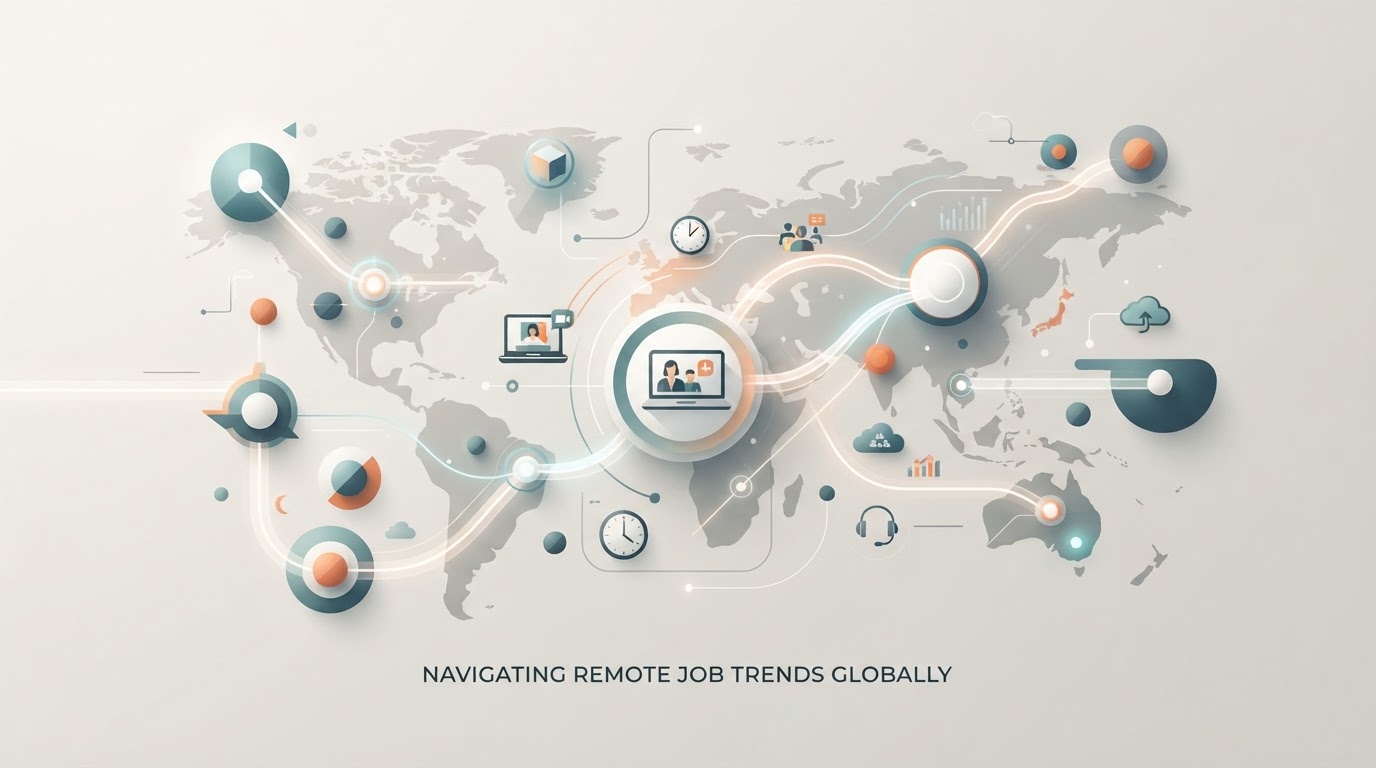
Navigating the Future of Remote Job Trends Globally
Introduction
The traditional 9-to-5 office environment is undergoing a permanent transformation. As businesses embrace the virtual workplace, professionals worldwide are rethinking traditional employment structures. Understanding the future of remote job shifts is essential for navigating today's rapidly changing global talent pool.
The Evolution of the Global Workforce
The traditional boundaries of employment are dissolving rapidly. Organizations now routinely tap into a expansive global talent pool, bypassing geographic limits to secure specialized skills. This shift feeds directly into the modern digital nomad economy, fundamentally altering how professionals approach career development across borders.
Technological Enablers of Virtual Work
Advanced collaboration suites and cloud infrastructure are the backbone of any successful virtual workplace. These tools bridge geographical divides, ensuring seamless real-time communication that keeps teams productive regardless of location.
Pro Tip: Invest in secure, centralized platforms to protect sensitive data while empowering distributed teams.
Cultural Shifts in Traditional Industries
Legacy sectors like finance and healthcare are finally softening rigid attendance policies. By adopting a structured hybrid work model, these organizations discover that measuring output beats monitoring desk time. Consequently, leadership mindsets are evolving to trust distributed teams, permanently altering corporate cultural norms.
Opportunities and Challenges Ahead
Embracing the future of remote job opportunities allows companies to drastically cut overhead while accessing specialized expertise worldwide. However, managing distributed teams introduces distinct hurdles.
- Communication silos
- Data security risks
- Employee burnout
Pro Tip: Establish clear asynchronous communication protocols to protect team well-being across different time zones.
Global Talent Pools and Freelancers
Companies expanding their global talent pool can easily scale operations without traditional hiring bottlenecks. Independent professionals thriving within the digital nomad economy provide specialized agility that permanent staff often lack. This symbiotic relationship accelerates project delivery across borders.
Pro Tip: Vet independent contractors through structured skill assessments rather than resumes alone to guarantee project success.
Security, Compliance, and Management Hurdles
Scaling a distributed workforce introduces complex regulatory frameworks and data vulnerabilities. Organizations must navigate international labor laws, tax obligations, and cybersecurity protocols to protect the future of remote job stability.
Warning: Ignoring local employment regulations when hiring across borders can result in severe legal and financial penalties.
FAQ Section Overview
Navigating the future of remote job markets naturally raises practical questions for both employers and professionals. Clear answers regarding compliance, technology, and policy help stakeholders make informed decisions in a shifting virtual workplace.
- What are the core drivers behind the hybrid work model adoption?
- How do companies legally onboard talent from a broader global talent pool?
Pro Tip: Keep your remote work policies updated regularly to address evolving international tax laws and cybersecurity standards.
Conclusion
Embracing the future of remote job markets requires deliberate strategy and adaptability from both employers and professionals. Organizations that successfully balance technological infrastructure with empathetic workplace culture will thrive in this evolving landscape. Ultimately, sustainable growth depends on how well we navigate these structural shifts.
Frequently Asked Questions
What is the future of remote job opportunities worldwide?
The future of remote job opportunities points toward sustained global expansion rather than a temporary trend. As digital infrastructure improves, companies routinely bypass geographic barriers to secure specialized expertise. This ongoing evolution is reshaping how professionals view career mobility.
How are traditional businesses adapting to remote work?
Legacy enterprises are gradually replacing rigid office mandates with flexible structural frameworks. Many organizations now rely on a hybrid work model to balance in-person collaboration with autonomous execution. Consequently, management strategies are shifting from physical oversight to metric-driven output.
Will remote jobs replace in-office positions entirely?
Complete replacement is unlikely because certain operational workflows still benefit from physical proximity. Instead, the market is settling into a segmented landscape where roles suited for a virtual workplace coexist with necessary on-site functions. Ultimately, job architecture will depend on specific industry demands rather than a one-size-fits-all approach.
What skills are most in demand for remote workers?
Distributed environments require a distinct blend of technical proficiency and self-management capabilities. Professionals who excel at asynchronous communication and independent problem-solving consistently secure the best roles.
- Advanced digital literacy with cloud collaboration tools
- Exceptional written communication across time zones
- Strong organizational habits and time-management discipline
Pro Tip: Highlight your remote project management experience prominently on your resume to prove you can deliver results without direct supervision.
How do legal and tax regulations impact global remote hiring?
Hiring across international borders forces organizations to navigate complex local labor laws and permanent establishment risks. Failing to comply with regional tax codes can trigger severe financial penalties for unsuspecting employers.
Warning: Never onboard an international contractor without first verifying local labor classifications to avoid accidental misclassification lawsuits.
Can freelancers expect more stability in the future remote market?
Independent professionals can anticipate robust demand as companies seek flexible agility within the digital nomad economy. However, income stability often depends on diversifying client portfolios rather than relying on a single long-term contract. Building a recognizable personal brand remains the most effective defense against market fluctuations.
Leave a Reply